
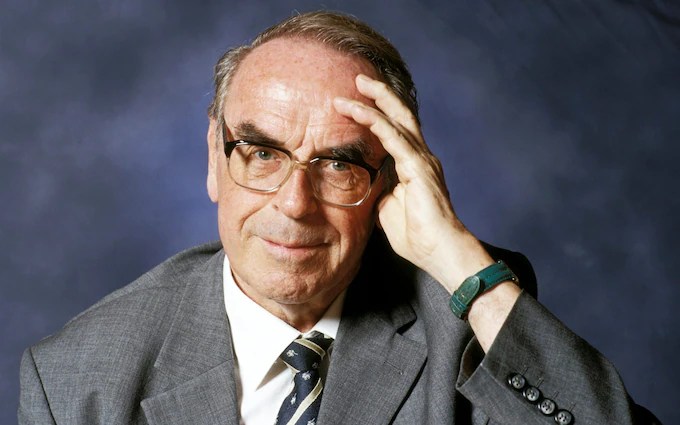
A Theological Reflection on the 1520th Day of Russian Aggression against Ukraine
Introduction
Can the crucified God of Jürgen Moltmann speak directly and urgently to a people being crucified today? That question, at the center of his centenary, has pressed on me relentlessly since February 2022.
Before I try to answer it, a personal note. In 2011 I contributed a chapter, on what pastors and local churches in the former Soviet Union expect from theological education, to The Church of the Future, a Portuguese-language volume edited by Manfred W. Kohl and Antonio Carlos Barro, which also included Moltmann as a contributor. I mention this not to claim any closeness, since I never met him. But for a Ukrainian theological educator working near and inside the empire that would invade my country in 2014, seeing my name in the same table of contents as his was a small and concrete gesture of inclusion, an invitation into a wider conversation that Ukrainian theological voices had rarely been part of at the time. I want to acknowledge that in this centenary year as a debt I have not forgotten.
Hamburg, July 1943. A seventeen-year-old is manning a flak gun during a British firebomb raid. His schoolfriends are killed. The one standing right beside him is killed. He survives. That night, in his own words, he cries out to God for the first time: my God, where are You? [1]
Eighty-three years later, on the 1520th day of this war, I stand before you. I come from a theological community serving people wounded by this aggression, and from a family in which five siblings and cousins and nephews have been killed by russians since 2022, while another six serve on the front line. That question of the seventeen-year-old is the question my family asks today.
But one critical difference marks our context. Moltmann reflected on suffering afterward, developing his ideas with the benefit of postwar distance and relative peace. Our theology has to emerge inside relentless violence, with no postwar silence, since the bombs have not stopped and the dead and the destruction are still among us. My colleagues and I have been writing and editing Light in the Valley of the Shadow of Death, Beatitudes and Terror: Ukrainian Theological Response to Russian Aggression, and the forthcoming Pastoral Ministry During Wartime: The Ukrainian Experience, all of them attempts at theology under missile fire rather than after it. For us the line “when freedom is near, the chains begin to chafe” [2] is no abstract formulation. It describes our nightly reality.
On this centenary I come not as a student to a professor, but as someone who read his letters from an earlier captivity and discovered they were written in a language I did not know was mine until this war taught it to me. I want to say three things, and to close with one image.
1. In defense of the millennium
It has become fashionable, in the white corridors of academic theology, to be quietly embarrassed by Moltmann’s millennium. His doctrine of a thousand-year reign of Christ on this earth, a period before the final resurrection in which the poor enjoy freedom and the martyred enjoy fullness of life on earth, is treated as a curiosity, as though the old man had permitted himself one eccentric indulgence in his last systematic book.
From Ukraine I respectfully disagree. The millennium is one of the morally most serious ideas in twentieth-century theology, and a move Ukrainian theology has long been waiting for, perhaps without knowing it.
For almost five years now we have been told, gently or forcefully, pastorally or ecumenically, sometimes even with tears of compassion, that our longing for justice is theologically immature. That we should move toward forgiveness. Toward reconciliation. Toward a cheap peace that amounts in practice to the quiet erasure of the crime. That justice, if we must speak of it at all, happens in eternity, where all things are made new, every tear is wiped away, and victim and perpetrator stand together before the throne. On earth, meanwhile, we are asked to be silent, to be kind, to stay above the situation, to consider both perspectives. To be, in effect, non-Ukrainian, while russians are encouraged to remain russian.
I have been writing against this counsel for almost five years [3] and will not rehearse the arguments here. I will simply say that Moltmann’s millennium cuts through it like a blade, because what he insists on, and this is the part his critics tend to miss, is that justice has to be done on the same earth where the injustice happened. Not in a timeless simultaneous eternity. Not on a new earth with no continuity with the one soaked in the blood of its victims. On this earth, the one where Babyn Yar lies, and Bucha, and Izium, and the mass graves of Olenivka, and the tortured bodies of Mariupol.
The widow of a soldier killed at Bakhmut does not want her husband’s justice performed in an eternity where the killer sits at the same heavenly banquet. She wants it performed on the soil where the killer killed him. She wants the children he will not have, on the earth he defended. The wedding anniversaries, the grandchildren, the quiet Sunday mornings, the stupid weekday arguments that were stolen from them, rather than compensation in an abstract timelessness.
Moltmann understood this. The man who spent three years in a POW camp, who watched his country wake to the photographs of Auschwitz and the ashes of Hiroshima, understood that a purely vertical eschatology, one that leaps from present suffering straight to eternal bliss, dishonors the dead by making their earthly losses unimportant. That is the eschatology of people who have not recently buried anyone. This is why he can write, after a lifetime of eschatological thought, that Christianity is defined from first to last by hope, [4] and why an eschatology without the millennial aspect is one that withdraws from real history. [5] An eschatology withdrawn from history is precisely what Ukraine cannot accept, and precisely what some of our Western partners, though certainly not all, offer us out of goodwill and a desire for quick reconciliation, focusing on victims while leaving those who support the aggression unaddressed.
Let me be honest about the limits. There are aspects of Moltmann’s millennium I cannot accept as they stand, particularly his tendency to render eternity as a kind of simultaneous now, with all times coexisting, without development or growth or story. That places an unnecessary burden on the millennium and forces the thousand years to carry a weight they would not need to carry if his eternity were more dynamic. If I were writing a book, I would press harder on the eternity side. But this is a response rather than a book.
For us the doctrine remains essential, since it grants permission to hope for and to demand a tangible justice and resurrection on the same ground where the blood was shed. There will be a date, a place, an earthly answer.
2. Political monotheism and the Russkiy Mir
Moltmann’s critique of political monotheism was presented to a European audience as a systematic thesis. From here it is not simply a thesis but a tool, one we reach for while bishops and pastors across the border go on blessing the missiles and blaming Ukrainians for being Ukrainian.
The argument he develops most fully in The Trinity and the Kingdom of God runs like this. Much of Western Christianity, and of Eastern Christianity in its imperial forms, has functioned practically as monotheism rather than as trinitarianism. The creed says Father, Son and Holy Spirit, and the working picture of God, in church and in society, has often been a single divine sovereign: one absolute ruler, one heavenly throne, unilateral authority over a subjugated creation.
In postwar Germany, Moltmann was diagnosing how Christian Europe had tolerated and in places actively supported the absolute state. In Ukraine, the same diagnosis names the theological architecture of the Russkiy Mir with uncomfortable precision: one God on one throne, one patriarch, one emperor, one canonical territory, one sacred people permitted to torture other peoples for the sake of a higher spiritual unity. When Moltmann said that the Trinity is not a sole ruler, he was not making a scholastic observation about the inner life of God. He was denying the premise on which Moscow’s Christian empire still rests, and which still blesses the shelling of other Christians. What we are resisting, in our streets and in our graveyards rather than metaphorically, is not some exotic heresy from a forgotten council. It is political monotheism in its purest contemporary form.
Moltmann’s social trinitarianism has its philosophical problems, and theologians will debate for another century whether three centers of consciousness can avoid tritheism. Let them debate. What his work gave us here was the vocabulary to say that the Trinity is a communion of persons whose fellowship is the template for a fellowship of peoples who do not need to crush one another in order to be one. The vocabulary to say that the Moscow patriarchate’s symphony of church and state is pre-Christian imperial monotheism with a golden miter. The vocabulary to say that a church which has collapsed into the person of a single autocrat has collapsed into idolatry, however many icons hang on its walls and however heartfelt the sermons from its pulpit. This is a gift, and I want to name it publicly in a centenary year: Moltmann did more for Ukrainian ecclesiology than he probably knew.
And I have to be careful here. His fellowship of the unlike, that beautiful vision of the church as a community welcoming those unlike itself, must not be turned against us. It is sometimes deployed in our direction by well-meaning Western Christians who would like us to include, in our ecclesial fellowship, those who are still shelling and killing and torturing us, and to sit down, in the name of openness, with bishops who bless the Russkiy Mir.
Trinitarian openness does not abolish the distinction between perpetrator and victim. Moltmann, a child of the Third Reich, knew that better than anyone. The fellowship of the unlike does not ask the tortured to embrace the torturer while the torture continues. It asks something more demanding and more honest: that we refuse to dehumanize the torturer even as we refuse to reconcile with him before his repentance. And that the call to that fellowship be addressed first of all to russian Christians and church ministers.
3. The imprecatory prayers
Now the hardest move, the one I owe to Moltmann and where I must also press beyond him.
Following his own formation, Moltmann directs us to the psalms of lament and to the cry of dereliction in Mark 15. He teaches that God is with the sufferer, that the crucified God is present on every gallows in our world, and that Auschwitz is not the last word because God was in Auschwitz before any theologian ever spoke about it. In his own words, there could be no theology after Auschwitz if there had been no theology in Auschwitz. [6]
This may be the deepest pastoral line in twentieth-century theology, and I owe my own ministry to it. When I sit with a widow who has nothing to say and I have nothing to say back, when I listen to a veteran who is afraid of the dark and cannot sleep with the light on either, when I refuse to rush toward solutions and only stay present, when I resist the temptation to turn her grief or his trauma into a sermon illustration, I am practicing a discipline Moltmann taught the global church. The discipline of not leaving.
But our Psalter holds more than laments. It holds imprecations. Psalm 137, with its terrible closing line about the children of Babylon. Psalm 109, cursing the wicked. Habakkuk demanding how long, not as a pious question but as an accusation. And the martyrs under the altar in Revelation, crying out: “How long, O Lord, holy and true, until You judge and avenge our blood on those who dwell on the earth?” (Revelation 6:10, NKJV).
Ukrainian evangelical theology, in the fifth year of this war, has had to rediscover those texts. Our seminaries have had to teach students that “love your enemies” (Matthew 5:44, NKJV) does not abolish the how long of Revelation, and that pastoral presence with the victim does not require pastoral silence before the perpetrator. The crucified God suffers with the victim, and the risen God judges the perpetrator. Both are true, and holding only one of them produces sentimentality, which in this war amounts to permission for Ukrainians to go on being killed.
Moltmann gave us the first half, the God hanging on the gallows beside the boy in the camp, and we are in his debt for it. Let me complete the sentence from here. The God who hangs beside the tortured boy is also the God who will raise that boy and bring the torturer to judgment. Not in a distant spiritualized eternity, but, I want to believe, on earth. In the millennium. At a specific place, at a specific hour, in a specific court, on the soil where the crime was committed. This is a completion of Moltmann rather than a departure from him, and it is possible only because his life’s work gave us permission to speak this way.
Conclusion: the tulips in the rubble of Borodianka
Moltmann said there would be no theology after Auschwitz had there been no theology in Auschwitz. [7] Ukrainian evangelical theologians must now say, quietly and soberly, that there will be no honest theology after Ukraine if we do not do the theology in Ukraine, here and now: in the trenches, in the basements and subway stations, in the trauma-counseling sessions, in the funerals, in the chaplaincy training programs, in the seminaries that go on teaching while missiles fly overhead, in the pastoral networks that accompany widows and prisoners of war and families of the missing. If that theology is not done now, by us, on our soil and in our scarred bodies, the world and the global church will one day write a theology about us that smooths over the scars, and we will have lost twice.

In April 2022 I photographed tulips growing out of the rubble of Borodianka, and I wrote in my diary: that flower did not choose where to grow, it simply grew where it was, and in that “simply” lies the whole mystery of our calling.
The same is true of Moltmann. His theology did not choose Ukraine. It was written in German, in Tübingen, about Auschwitz and Hiroshima and the long aftermath of a European catastrophe, and it did not anticipate Bucha or Bakhmut, the Azovstal defenders, the silent phones of Mariupol mothers, or the theology now being written in our seminaries during cherry nights. By the time he died in June 2024, he had lived through two and a half years of Bucha and Mariupol and Izium and Bakhmut entering the world’s vocabulary, and through ten years of the slow war that began in 2014. He did not write against this war, and I will not speculate about why. What I know is that his categories reached us regardless, through earlier books written for an earlier catastrophe.
They bloomed because his was always a theology of things growing where they were not expected to grow. Like hope. Like seeds carried by wind across borders nobody drew. The millennium on this same earth rather than another one. The crucified God beside this specific victim, beside my brother Andrii, beside the woman at Bucha, beside the boy at Olenivka, beside the parents of the missing in the Kharkiv and Kherson regions, rather than beside humanity in general. Hope inside this chain, chafing now, on the 1520th morning, rather than a hope deferred to a cleaner decade.
A flower in the rubble of Borodianka is a fact rather than an argument, and so is Moltmann’s theology of hope in Ukraine. It simply grew where it was. And we have been gathering what it produces: in our Langham volumes, in our educational development with Mesa Global, in the vital sustainability initiatives with Scholar Leaders, in library development with Read Ministry, and in the work of Open Eyes, Keys Connection, Overseas Council Europe, Local Leaders Global Online, Dnipro Hope Mission and other partners across Ukraine and the region. These partners decided not to wait for the war to end before supporting hope. And this hope has grown at our funerals as well, without our always knowing whose seeds we were tending.
Postscript
Will there ever be russian theologians who write a theology after Bucha, the way Moltmann wrote a theology after Auschwitz?
Honestly, not in this generation. Moltmann could write what he wrote because he had three things that russian Christianity, and the vast majority of russian evangelicals, lack: a defeated army, a denazified state, and a church that came through with at least some moral capital intact after the resistance of the Confessing Church. Russia today has none of these. Its army has not been defeated. Its state has not repented. Its church is not a victim of the regime but, in the vast majority, the regime’s court prophet and chaplain. Without those preconditions, no theology after Bucha is possible from Moscow. Perhaps from russians in exile, in twenty or fifty years. Not sooner.
Happy centenary, Professor Moltmann. Thank you for the seeds. We will keep gathering the flowers of hope from the rubble, until there is no more rubble. Taras D., Ukraine
1520th day of the ongoing full-scale russian war against Ukraine
[1] Jürgen Moltmann, The Source of Life: The Holy Spirit and the Theology of Life, trans. Margaret Kohl (Minneapolis: Fortress Press, 1997), chapter 1. The episode is also recounted in A Broad Place: An Autobiography, trans. Margaret Kohl (Minneapolis: Fortress Press, 2008).
[2] Jürgen Moltmann, The Crucified God: The Cross of Christ as the Foundation and Criticism of Christian Theology, trans. R. A. Wilson and John Bowden (Minneapolis: Fortress Press, 1993), preface to the paperback edition.
[3] See Taras M. Dyatlik, “Sunday… You rose… But Why With Scars?…” (5 April 2026) and the “Grief Unmasked” series at dyatlik.blog; also “Biblical Reflections from a Ukrainian Theologian’s War Diary,” Christianity Today (June 2024); “Unanswered Prayers in Ukraine,” Plough (December 2025).
[4] Jürgen Moltmann, Theology of Hope: On the Ground and the Implications of a Christian Eschatology, trans. James W. Leitch (London: SCM Press, 1967), 16.
[5] Jürgen Moltmann, The Coming of God: Christian Eschatology, trans. Margaret Kohl (Minneapolis: Fortress Press, 1996), part III, especially §3 on historical millenarianism.
[6] Moltmann, The Crucified God, trans. R. A. Wilson and John Bowden (London: SCM Press, 1974), 278.
[7] Moltmann, The Crucified God, 276–278.

Leave a Reply